All Categories
Featured
Table of Contents
Hi I am developing a program wherein trainees are signing up for a test which is conducted at a number of cities through out the nation. While registering students supply a list of 3 cities where they wish to give the test in order of their preference. So a student may say his very first preference for an examination centre is New york city followed by Chicago followed by Boston.
The basic way to do this would be to first go through the list of very first option of trainees allocate as lots of as possible then go through the list of second options and allot. This might lead to the trainees who are initially in the list getting their first centre and the last trainees getting their 3rd choice or worse none of their choices.
How to Optimize Infrastructure ROI With Advanced MetricsOrganizations choose every day how to assign their resources, whether it's identifying which items to produce, allocating a portfolio of EV-charging stations to optimize roi, or combining shipments to save on shipping expenses. By developing a digital twin of the organization's operational reality, Foundry leverages the digital representation of the company to drive and enhance resource allowance decisions.
Balancing Cloud Costs Vs Efficiency Metrics
Organizations are confronted with a range of such allotment and optimization issues. Resource allotment and optimization workflows require companies to collect, tidy, change, and design relevant information such that ideal allotment decisions can be made. This is often done through specialized software operating on top of a single data source that can not be adapted to brand-new truths and changing organizational characteristics, or through painstaking collation of multitude data sources, spanning a plethora of spreadsheets and databases.
First, subject-matter experts identify objective functions that should be maximized or decreased, identify the relevant dynamics, and specify the system and its restraints. Appropriate information that need to be gathered and integrated from source systems is determined. This is typically an iterative procedure where Contour and Quiver are used to drill into the data and understand what is feasible.
The Foundry ML suite incorporates Maker Knowing, Expert System, Statistical, and Mathematical models with essential parts of the Foundry community and permit designs to be operationalized and their performance kept an eye on gradually. In the EV Charging Station Allocation usage case, geographic information, financial data, and features of the portfolio of prospective charging stations are combined and scored. Associated products: Simulated ideal allocations, scenario candidates, or "What-If" scenarios are generated through automated Transforms. The optimum allotments or circumstance options can be checked out and assessed in no- to low-code applications constructed in Workshop or Slate applications. In the Load Utilization Enhancement usage case, users exist with suggested chances to combine deliveries (truck-loads) in order to save money on shipping expenses.
These opportunities take into account additional stops, rescheduled pickup/delivery appointments, and plant/customer restraints. The Load Organizer then Approves, Turns Down, Combines, or Reassigns the Chance. Writeback of allocation decisions together with the context in which each decision was made means that the predicted versus actual result can be compared and examined with time.
Related items: Despite the Pattern used, the underlying data foundation is constructed from pipelines and syncs to external source systems. Information integration pipelines, composed in a range of languages including SQL, Python, and Java, are utilized to integrate datasources into the subject ontology. Foundry can from a large range of sources, including FTP, JDBC, REST API, and S3.
How to Refine Cloud Spending in 2026
Want more info on this usage case pattern? Seeking to implement something comparable? Begin with Palantir. .
The type of issue most often recognized with the application of linear program is the problem of dispersing limited resources among alternative activities. The limited resources are the times offered on the makers and the alternative activities are the specific production volumes.
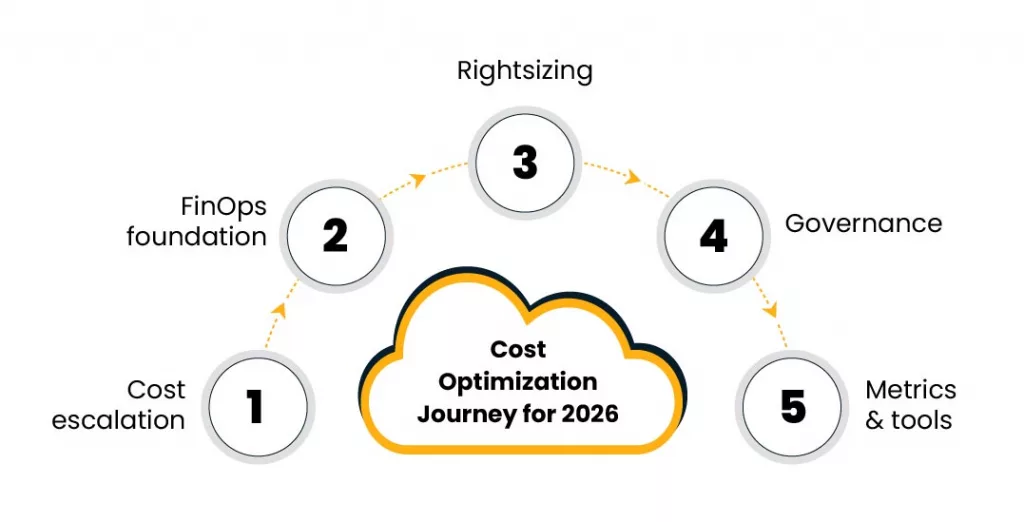
With the exception of item 4 that does not need maker 1, each item must pass through all four makers. The system profits are also revealed in the table. The center has 4 devices of type 1, five of type 2, three of type 3 and seven of type 4.
The problem is to identify the optimum weekly production amounts for the products. The objective is to maximize overall earnings. In constructing a design, the initial step is to define the decision variables; the next action is to write the constraints and objective function in regards to these variables and the issue data.

Latest Posts
Top Strategies for Better IT Resource Optimization
Using Performance Metrics to Boost Cloud ROI
Next-Gen IT Asset Management for Cost Control